

By Elizabeth Gutterman
Elizabeth Gutterman is Waring’s Theatre Director, Theatre Teacher, Writing Teacher, and Group 4/5 Dean. She served as a chaperone on this year’s Alabama trip with Group 1 students. This piece is her reaction and reflection on this annual Civil Rights trip.
I start my walk through The Legacy Museum, hoping that somehow we are blameless, but then I see that Boston was an integral port for the slave trade, and Providence, Bristol, and Newport, too. And Kittery, Maine. We are not immune. We own this. This is our legacy: 13 million men and women kidnapped, stripped of their humanity, trafficked, enslaved, put on the auction block, forced to tell of their capabilities, beaten if they bragged or didn’t brag enough. This is our legacy. From slavery to mass incarceration. We are complicit. Babies ripped from mothers, mothers ripped from babies. Siblings sold, never to be seen again. Because family separation is not new here.
Confronting Our Shared Legacy
As we walk the cobblestone streets of Birmingham and Montgomery, we know there is bloodshed underneath. We are on sacred ground, ancestral land.
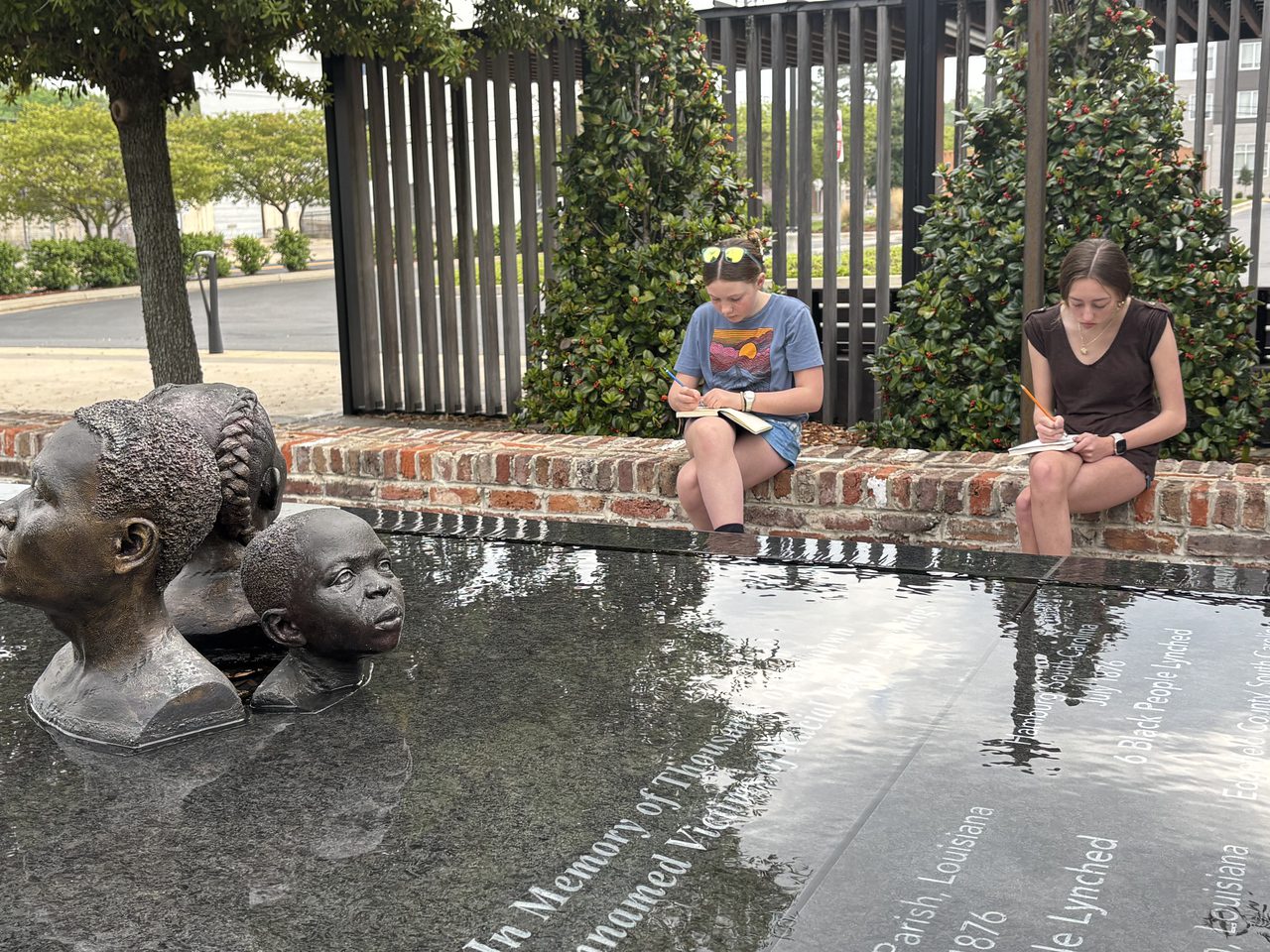
At The National Memorial for Peace and Justice, we look at the signs detailing the supposed crimes people were lynched for – asking for water, kissing a white woman on the hand, and annoying a white woman. How can that be? I hear the kids ask. Just for annoying someone? Suddenly, they feel vulnerable.
At the Mothers of Gynecology Park, Steve Browder shows us a painting of an African-American woman sitting on an exam table with her hand on her heart, worry on her face. In front of her is a doctor holding a speculum, telling her what he will do to her. Behind her, three eager doctors look on. Two African-American women are pulling back a curtain to see what fate awaits them. Steve tells us that his sister, Michelle, was in art school and saw the picture; she needed to know what was happening. She learned about all the experiments and surgeries without anesthesia done on these women – Anarcha, Lucy, and Betsey. Steve tells us that these women could not say no. He says we see this today in human trafficking, and when he says Epstein Island, air catches audibly in my throat and he says, I’m sorry, but I have to say it. I have to say it because we need to see it, feel it, and name it. Iona can’t understand this. How can this be true? She wonders. Why didn’t they have a choice? They were enslaved, he says, and she understands. She feels the weight of this deeply. Later, at the Voting Rights Marches museum, we talk. Yes, Dad, I tell her about the blessings and burdens of sensitivity. What can we do? Our students want to know. Steve says, You have to see it. You have to name it so you can feel it, and then you can start to change it. I know they want to. Steve tells us that we must be in service to one another. True service. We have to see each other. What do you need? How can I help? I am here for you.
While the doctor in that picture is credited with being the “father of gynecology,” we are here to name and honor these uncredited, exploited and all but erased women as the mothers. There are three imposing, beautiful statues of them, gracing the garden. They look out over their campus’ soon to open birthing center to support women at all stages of pregnancy, and a mobile pod that goes into the most rural places in Alabama, providing neonatal care to so many women in need.
The Edmund Pettus Bridge and the Legacy of John Lewis
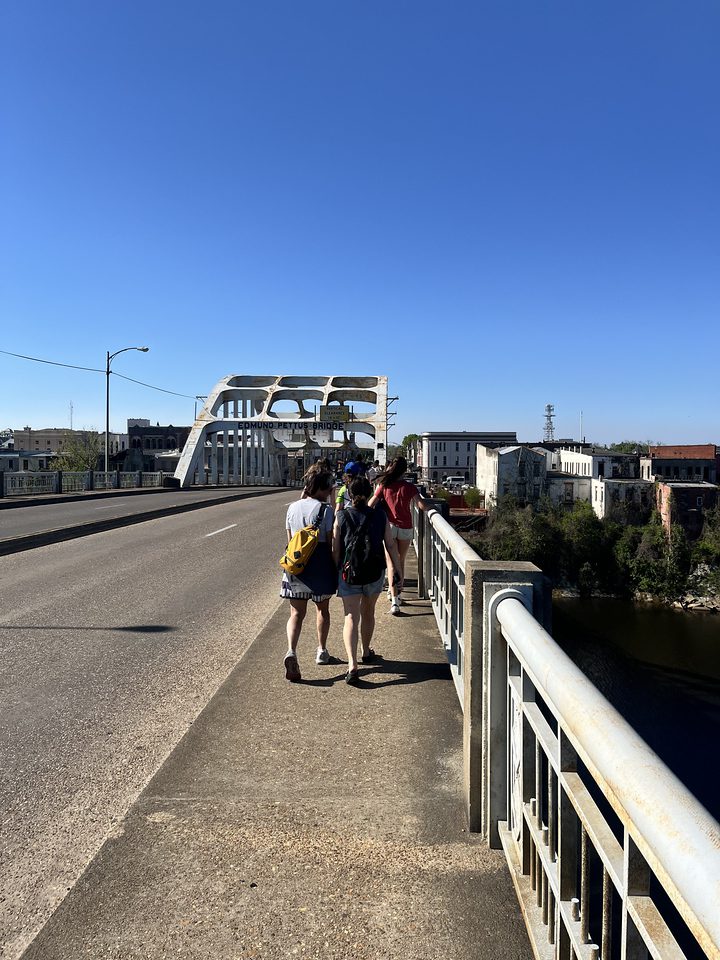
Later, in Selma, we walk across the Edmund Pettus Bridge to honor the voting rights march John Lewis led. We tell our students that we will not talk as we walk across the bridge. I imagine that if we are quiet enough, we will hear his booming voice across the years, rousing activists to be brave, to not back down, reminding marchers that voting rights are sacrosanct and inalienable. I am last in line as we walk, and I watch as our students look down at the water and up to the horizon, and across to the other side of the bridge, and I think this is the best trouble.
Our students have all done research projects and they present them at the actual sites we have come to see, the places we bear witness. At the base of the bridge, Henry tells us that John Lewis would preach to his chickens when he was five, and that when they were killed, he would go on strike and refuse to eat them.
Remembering Viola Liuzzo
Later, as we return to Montgomery, we pull off the road so Evey can tell us about civil rights activist Viola Liuzzo. Amid cars and trucks whizzing by, we learn how she was inspired by Martin Luther King and John Lewis to come from Michigan to fight for voting rights. While driving a young black activist from Selma to Montgomery, she was shot and killed at this spot by a KKK member. And we remember her here. Evey tells us she was criticized for leaving her children in the care of supportive family members so she could do this work. Because misogyny is certainly not new.
 Finding Community and Faith on Palm Sunday
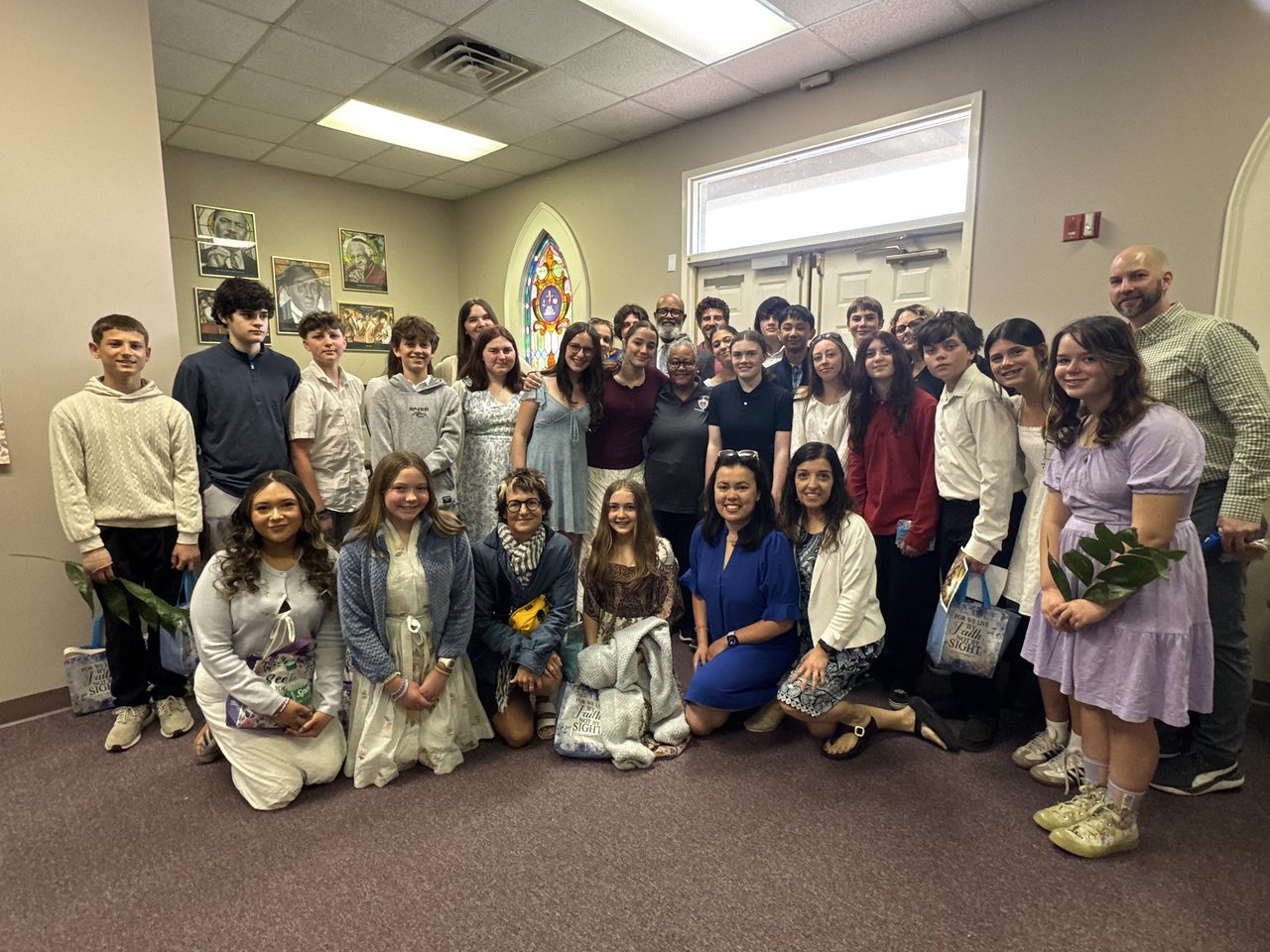
On Palm Sunday, we join the parishioners at Saint John’s African Methodist Episcopal Church. Here, when they say Sister and Brother, they really mean it. I am delighted to hear about the care bags they are making for people facing new cancer diagnoses. I am eager to donate to this cause, grateful for the opportunity. I’m not one to call out Jesus’s name on the regular, but give me some palms and a thunderous call-and-response, and I am fully here for it. When the pastor gently chides us for missing our cues to raise the palms, I look at the students stage right and stage left of me in my row. They smile at me, readying themselves for the next cues.
Our leader, Jill, is invited to address the congregation. She tells them that we are here because our students are studying America’s Creed, both when we are close to it and when we stray far away. The parishioners embrace us with open arms. They feed us, and they tell us they are glad we are here to see and learn, and to hopefully try the catfish. They tell us we are always welcome here.
At The Freedom Monument Sculpture Park, I stand behind Ainsley as she draws a small, just-planted tree. In her rendering, the branches seem thicker and stronger, and like those feathers, hope catches in my heart.
Bearing Witness and Finding Hope for the Future
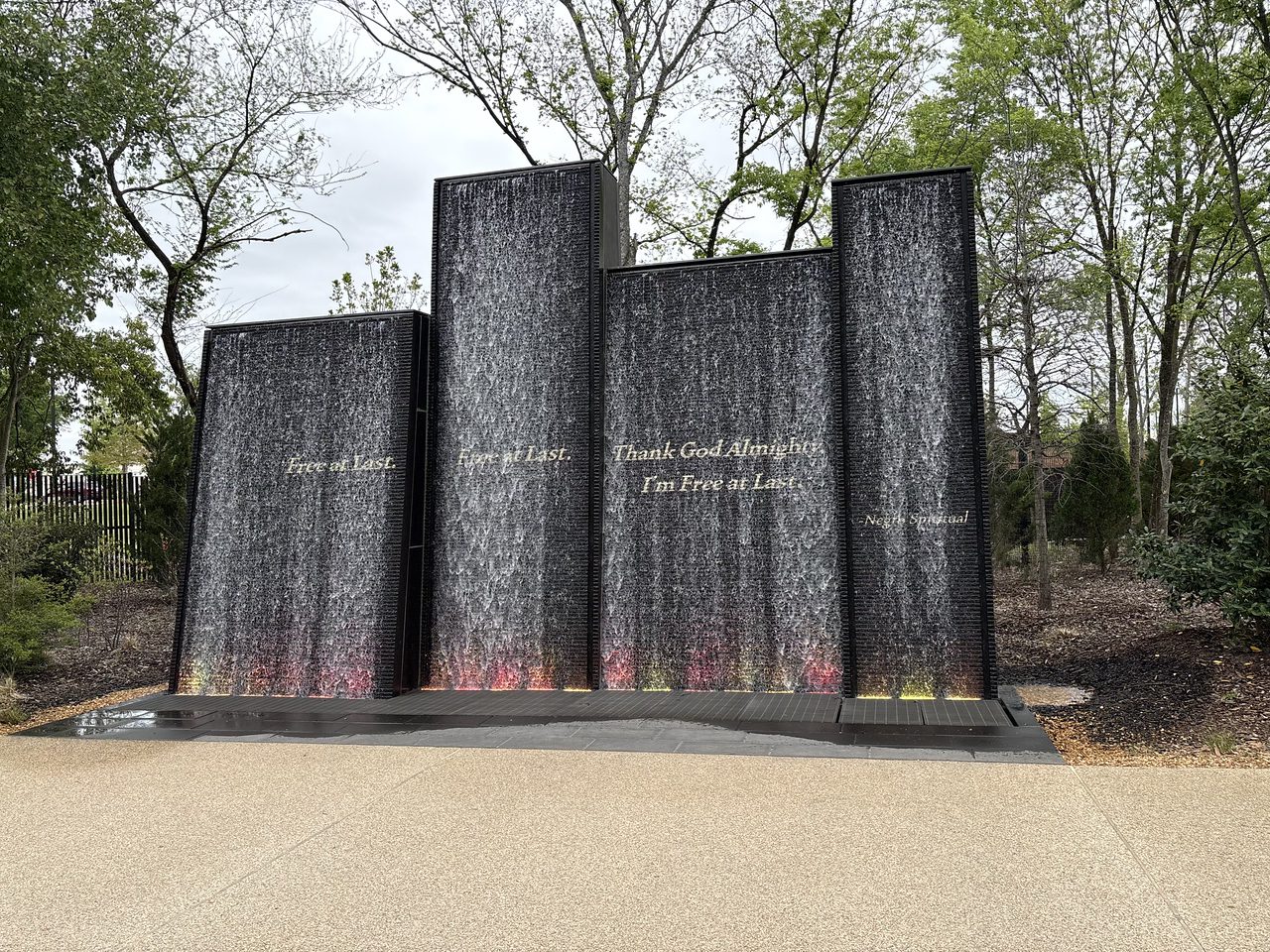
The last exhibit at The National Monument to Freedom is a massive wall honoring names formally enslaved people chose for themselves. The wall is flanked by four pillars inscribed with Perseverance, Hope, Strength, and Faith. Facing the wall, there is a sculpture of a father and his two small children. They hold hands, eyes closed. Their faces are angled up to the wall – determination, strength, and possibility personified.
There are bowls of flowers at the base of the monument, and we are invited to take one to place it in the water to honor the people on the wall. I cup mine in my hands, and I marvel at how blessed I have been these past few days to bear witness with our students. I whisper Shehecheyanu – the Jewish prayer expressing gratitude for being present at this momentous time – as I gently place my white carnation in the water. I watch as it floats down to meet the others. And I know that together we see each other, and we will do our best to remember and to share what we saw, and what we know now. Together, we hold each other accountable, and together we serve each other as we do the work of raising our brave young activists.